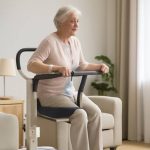
The act of standing is something most people take for granted. For a patient recovering from a hip replacement, an elderly individual with progressive muscle weakness, or someone living with a neurological condition, this simple motion becomes a monumental challenge. For decades, caregivers relied on manual techniques that placed immense strain on their own bodies or bulky floor lifts that felt impersonal and passive. The electric sit to stand lift has quietly revolutionized this landscape. It bridges the gap between complete dependence and full independence, offering a mechanical solution that respects the patient’s ability to participate in their own transfer. Unlike full-body sling lifts that require a patient to be completely passive, these devices capitalize on the user’s existing weight-bearing capacity. The unit positions itself with a sling that supports the back and a padded knee brace that stabilizes the lower body. When the motor engages, it performs a controlled, gentle tilt that guides the patient from a seated position to a stable, upright stance. This process does more than just move a person; it engages their core muscles, maintains joint integrity, and reinforces the neuromuscular pathways required for standing. The psychological benefit is equally profound. A patient who can assist in their own transfer retains a sense of agency and dignity that passive lifting often erodes. For the caregiver, the advantage is mechanical leverage. The motor handles the heavy lifting, turning a task that can lead to chronic back injuries into a safe, one-person operation. This shift from manual labor to guided assistance is the core of what makes these lifts indispensable in modern healthcare and home care settings.
The Engineering and Biomechanics Behind Safe Standing Transfers
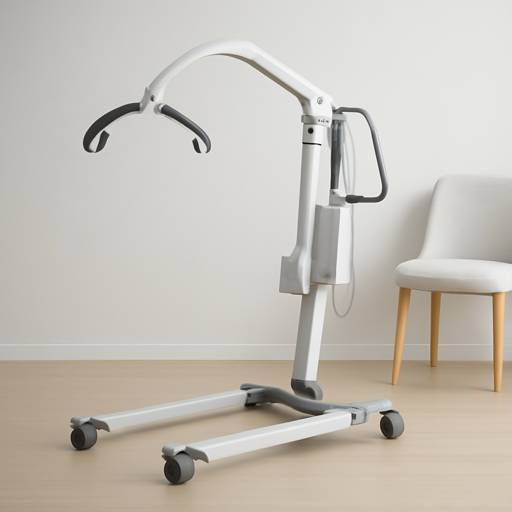
Understanding how an electric sit to stand lift operates requires a look at its core engineering. The system relies on a low-profile chassis that can slide under most beds, chairs, or wheelchairs. Attached to this base is a lift arm, powered by a rechargeable battery and a linear actuator motor. This motor drives the tilting motion. The key to its effectiveness lies in the biomechanical alignment. The footplate is positioned to keep the patient’s feet flat and shoulder-width apart, providing a stable base. The knee pads are adjusted to sit snugly against the shins, preventing the patient from sliding forward during the ascent. The sling, which wraps around the patient’s back or under the arms, connects to the lift arm. When activated, the lift arm follows a curved path that mimics the natural forward lean of the torso required to stand. This is crucial. A straight vertical pull would be disorienting and dangerous. The curved trajectory allows the patient’s center of gravity to shift forward naturally over their feet, reducing the resistance against the knees and hips. The motor operates at a smooth, consistent speed, eliminating jerky movements that could cause muscle spasm or panic. Many modern units feature safety sensors that stop the lift if excessive resistance is detected, protecting both the patient and the equipment from sudden jolts. The self-standing base is another engineering triumph. As the patient is lifted, the base widens, creating a wide stance that provides stability against tipping. This dynamic stability is essential because a patient who is assisting in the transfer can inadvertently shift their weight unexpectedly. The motors are designed for duty cycles appropriate for multiple daily transfers. Battery life is a critical factor; most units offer a full shift of transfers on a single charge, with sealed lead-acid or lithium-ion batteries that can be swapped out quickly. The control pendant is typically simple, with up and down arrows and an emergency stop, making it accessible for patients with limited dexterity and for staff who may be using the device for the first time. This combination of controlled dynamics, adaptive support, and robust safety features makes the electric version far superior to manual crank models, which require significant physical effort from the caregiver and lack the fine motor control of an electric system.
Clinical Impact and the Reduction of Caregiver Strain
The primary driver for adopting an electric sit to stand lift is often the mitigation of caregiver injury. Healthcare worker injuries are a persistent crisis. The Bureau of Labor Statistics consistently ranks nursing aides, orderlies, and attendants among the occupations with the highest rates of musculoskeletal injuries. Most of these injuries occur not from falling patients, but from the repetitive strain of manual lifting and transferring. When a patient can bear weight but requires assistance, the caregiver often resorts to a "hook and tuck" or an awkward under-arm lift. These techniques place immense shear forces on the lumbar spine. The electric sit to stand lift eliminates this entirely. The caregiver’s role shifts from a lifter to a guide and monitor. They are responsible for positioning the sling, securing the knee brace, and operating the pendant, while the motor does the arduous work. This dramatically reduces the biomechanical load on the lower back and shoulders. Studies have shown that the use of mechanical sit-to-stand devices can reduce the physical demands on caregivers by over 60% compared to manual techniques. For the patient, the clinical benefits are equally significant. Extended periods of bedrest or sitting lead to muscle atrophy, decreased bone density, and increased risk of pressure injuries. A stand lift facilitates consistent mobilization. For a patient with Parkinson’s disease, the repetitive, controlled standing motion can help combat rigidity and the "freezing" phenomenon often experienced when trying to stand independently. For post-operative patients, the lift allows for early weight-bearing without compromising the surgical site. The device also reduces the risk of patient falls during transfers. Because the lift provides a stable, wide base and supports the patient through the entire arc of motion, the chance of a misstep or sudden collapse is minimized. A facility that invests in a quality electric sit to stand lift is not just making a purchase; they are implementing a safety protocol. They are creating a system where dignity is preserved for the patient and physical health is protected for the caregiver. For facilities seeking a durable solution, investing in a quality electric sit to stand lift is a critical decision that pays dividends in staff retention, patient outcomes, and regulatory compliance.
Real-World Applications: Case Studies in Home Health and Long-Term Care
The theoretical benefits of the electric sit to stand lift are validated by specific, real-world applications. Consider the case of a 78-year-old woman living alone with advanced knee osteoarthritis. She can bear weight, but the pain and instability make the act of rising from her living room chair a fearful ordeal. A home health agency introduced an electric sit to stand lift into her care plan. The device was positioned next to her favorite chair. Instead of needing two aides to manually haul her to her feet, a single aide could place the sling behind her back, secure the knee pads, and guide the lift. The woman reported a significant reduction in transfer anxiety because she knew the lift would not let her fall. Her physical therapy progressed faster because she was being stood consistently multiple times a day without the fear of pain-induced collapse. In a long-term care facility, a different scenario plays out. A resident with moderate dementia became combative during transfers due to confusion and perceived force. The staff switched to an electric sit to stand lift. Because the motion is slow, steady, and predictable, the resident’s agitation decreased. The lift provided a consistent routine. The caregivers learned to approach the transfer as a collaborative process rather than a struggle. The reduction in agitation led to fewer PRN medications for anxiety and less staff burnout. Another powerful example is in the rehabilitation ward of an acute care hospital. A patient recovering from a spinal cord injury with partial lower extremity function was struggling with the transition from bed to wheelchair using a full-body sling. The sling felt confining. The sit to stand lift allowed him to use his leg muscles during the transfer, contributing to his neural retraining. The occupational therapist noted that the active participation in the transfer improved his motor planning and confidence far more than passive lifting could. In bariatric scenarios, the electric sit to stand lift excels where manual methods fail. Patients weighing over 300 pounds require mechanical assistance that does not depend on caregiver body mechanics. The heavy-duty models of these lifts can handle significant weight capacities while maintaining a stable base. These case studies illustrate a common thread: the electric sit to stand lift is not merely a tool for moving a body. It is an intervention that adjusts the dynamic between patient, caregiver, and environment. It converts a high-risk, high-effort task into a low-risk, patient-centered activity. The lift enables consistent, frequent mobilization that is clinically necessary but logistically difficult to achieve with manual methods alone. Whether in a private home, a bustling skilled nursing facility, or a surgical recovery unit, the device proves its value by simplifying complexity and reducing risk across the entire care spectrum.