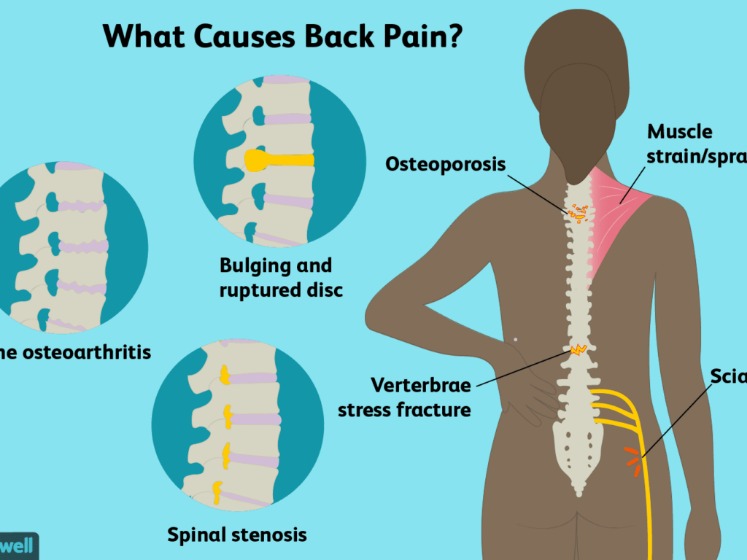
For millions of individuals facing mobility challenges, the simple act of standing up from a seated position can become a monumental task. Conditions like arthritis, muscular dystrophy, post-surgical recovery, or general age-related weakness often strip away the ability to perform a transfer without substantial assistance. For caregivers, these transfers are a leading cause of workplace injury and chronic back pain. The solution lies in a device that bridges the gap between full dependence and complete independence: the electric sit to stand lift. This technology is not merely a convenience; it is a transformative tool that redefines rehabilitation, dignity, and safety in daily care.
Unlike a full-body sling lift, which is designed for patients with zero weight-bearing capacity, the sit-to-stand lift is engineered for individuals who can actively participate in the transfer. The patient must have some upper body strength and the ability to brace their feet on a platform. The device uses a powered mechanism to gently tilt the patient forward into a standing position, providing support under the arms or around the torso. This active participation is crucial. It helps maintain muscle tone, bone density, and cardiovascular health, preventing the rapid deconditioning that often accompanies a sedentary lifestyle. The electric motor ensures a smooth, controlled transition, eliminating the jerky movements that can cause fear and instability. For the caregiver, it eliminates the need to perform a "dead lift," reducing the risk of back injuries that cost the healthcare industry billions annually. The electric sit to stand lift represents a strategic investment in long-term patient well-being and caregiver sustainability, moving the transfer process from a risk-filled maneuver to a predictable, safe, and dignified procedure.
Mechanics of Mobility: How Electric Power Transforms Patient Transfers
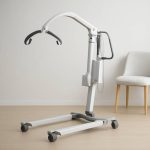
Understanding the internal mechanics of an electric sit to stand lift reveals why it is superior to manual alternatives. At its core, the device consists of a stable base with locking casters, a vertical mast, a footplate, and a padded knee brace. The critical component is the battery-powered actuator. When activated via a hand-held pendant or a push-button control, this actuator extends a hydraulic or screw-driven rod that pushes the lifting arm forward and upward. This action creates a natural, biomechanically correct standing arc. The patient's knees rest against a padded brace, anchoring the lower body, while the footplate provides a non-slip surface for weight bearing. The lifting arm, often equipped with a padded sling or harness that wraps around the patient's back or under the armpits, applies the upward force.
The electric aspect is not just about pure force; it is about precision control. Manual lifts require the caregiver to pump a lever, which can be physically demanding and often results in an inconsistent speed. An electric lift offers variable speed settings, allowing for a slow, gentle rise for a nervous patient or a faster transfer for a cooperative one. Furthermore, the battery system is a key feature. Modern lifts use sealed, deep-cycle batteries that can power dozens of transfers on a single charge. This portability means the lift is not tethered to a wall outlet, allowing it to move freely from a bedroom to a bathroom to a living room. Advanced models include emergency stop buttons and manual backup systems (usually a crank or a hydraulic release) to ensure the patient can be safely lowered in the event of a power failure. The engineering focuses on stability. The base is designed to spread wide for a solid foundation, yet it is narrow enough to fit under most hospital beds and wheelchairs. This combination of powered precision, patient anchoring, and robust stability makes the electric model the gold standard for any facility or home requiring consistent, safe standing transfers.
Integrating Electric Lifts into Rehabilitation and Daily Living
The application of the electric sit to stand lift extends far beyond acute medical settings. In the rehabilitation context, these devices are instrumental for early mobilization. Following a knee or hip replacement, a patient is often encouraged to stand as soon as possible. Using a manual lift or heavy assistance from two therapists can be painful and intimidating. The electric lift provides a controlled, predictable path, allowing the patient to focus on engaging their muscles and finding their balance. Therapists can adjust the lift's height and tilt angle to progressively challenge the patient, building strength and confidence. This "partial weight-bearing" training is essential for regaining gait function and preventing the formation of dangerous blood clots. The device acts as a spotter, a support, and a training tool all in one.
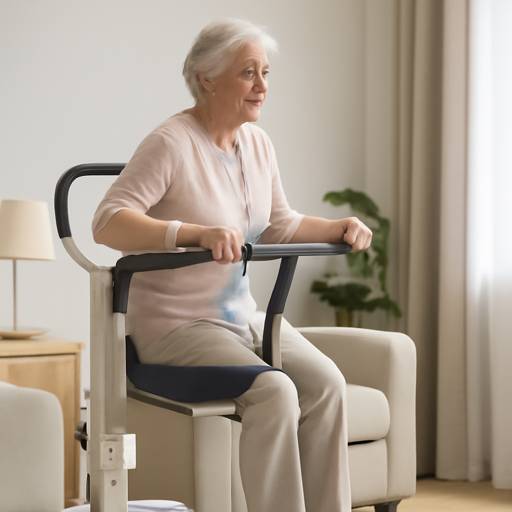
In the home care environment, the lift transforms the daily routine. Consider the simple act of toileting. This is often the single most stressful and dangerous transfer for caregivers and patients alike. An electric sit to stand lift can be positioned over a toilet, allowing the patient to be transferred directly from a wheelchair to the commode without being hoisted through the air. This maintains hygiene and preserves the patient's privacy. Similarly, transferring into a car for an appointment changes from a logistical nightmare to a simple, safe procedure. The psychological impact is profound. When a patient knows they can stand safely, their anxiety decreases. They are more likely to attempt other standing activities, such as standing to cook or to look out a window. This renewed agency fights the depression and helplessness that often accompany physical decline. The caregiver is also relieved. The physical strain is eliminated, reducing fatigue and allowing them to provide care without fearing for their own physical health. This investment in equipment directly correlates to a higher quality of life for everyone involved in the care dynamic, turning a clinical necessity into a tool for genuine human connection and independence.
Real-World Applications: Case Studies in Care Transformation
To truly appreciate the impact of the electric sit to stand lift, it is useful to examine its effect in specific scenarios. A major rehabilitation hospital in the Midwest implemented a protocol change, replacing manual pivot transfers with electric sit to stand lifts for all post-total knee arthroplasty patients over a three-month period. The results were striking. The rate of caregiver back injuries related to patient transfers dropped by 62%. Furthermore, the average time to first ambulation post-surgery decreased by 1.2 days. Patients reported significantly lower levels of pain and anxiety during the transfer process, citing the smooth, powered motion as the primary reason. The hospital reported a return on investment in under six months, factoring in reduced worker's compensation claims and shorter hospital stays.
Another compelling case comes from a home care agency serving a client with advanced multiple sclerosis. The patient had retained some upper body strength but lacked the leg stability to stand independently. His wife, his primary caregiver, was on the verge of a back injury from performing manual stand-by assists. After introducing an electric sit to stand lift, the dynamic changed entirely. The wife could now safely transfer her husband from his bed to his wheelchair and then to the toilet using the lift's footplate and knee brace. The patient regained the ability to participate in standing transfers, which slowed his muscle deconditioning. More importantly, the wife no longer feared the act of care. She reported a significant reduction in her own physical pain and emotional stress. This allowed her to continue providing care at home, delaying the need for a skilled nursing facility by over two years. These examples illustrate that the electric sit to stand lift is not just a piece of equipment; it is a catalyst for better outcomes, safer environments, and restored dignity for both the patient and the caregiver.